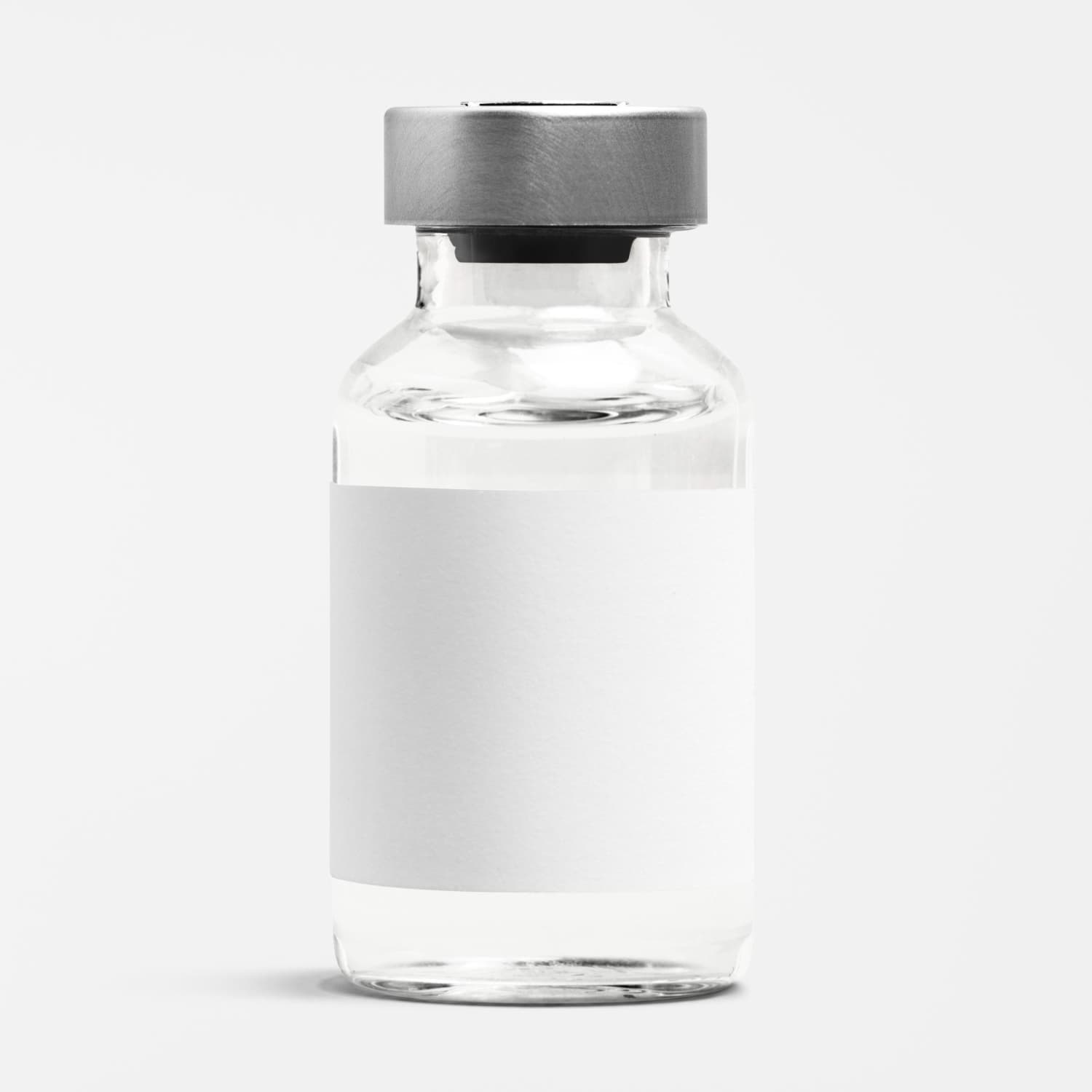
CP10 - CJC 1295 w/o DAC + Ipamorelin - 5/5 MG - Research Use Only
The 2X Blend combines CJC-1295 Without DAC and Ipamorelin — the standard GHRH+GHRP research combination producing synergistic, selective GH pulse amplification through two independent receptor systems.
Currently unavailable
This product is listed for research reference. It is not currently available for ordering. Live alternatives from the same research category are shown below.
Research reference only
This product is listed for research reference and is not currently available for ordering. See live alternatives below or contact the team.
What ships when you order 2X Blend CJC-1295 Without DAC / Ipamorelin
Lyophilized vial
Sterile-filtered, freeze-dried peptide in glass vial, sealed under inert gas.
Lot ID on every vial
Printed lot ID ties this exact vial to its analytical record.
COA on request
Independent third-party HPLC certificate, matched to your lot, sent on request.
Carrier-tracked shipping
Shipped from a US facility with full carrier tracking and protective packaging.
The Peptific standard
Why researchers buy from Peptific instead of grey-market vendors
Peptide quality is invisible until it isn’t. Lot identity, purity, fill integrity, and chain of custody are the difference between usable research material and wasted budget.
Third-party HPLC tested
Every lot is tested for identity and purity by an independent analytical lab. Certificate of Analysis available on request, tied to the exact lot you receive.
Lyophilized and lot-tracked
Sterile-filtered, freeze-dried, sealed under inert gas. Each vial carries its own lot ID — full chain of custody from fill to delivery.
US-based fulfillment
Orders ship from a temperature-controlled US facility with carrier tracking. No drop-shipping, no opaque overseas relay.
Real support, not a ticket queue
A real person responds to research questions, lot questions, and order questions — usually same business day. No bot triage.
How it works
The 2X Blend CJC-1295 Without DAC / Ipamorelin mechanism
CJC-1295 Without DAC activates GHRH receptors (somatotrope priming, pulse amplitude baseline); Ipamorelin activates GHS-R1a (pulse magnitude amplification) — two mechanistically independent receptor pathways. Combined, they produce synergistic GH release greater than either alone. Ipamorelin's GH selectivity (no cortisol/prolactin co-stimulation) keeps the GH endpoint clean for research interpretation.
Compound profile
Components
CJC-1295 Without DAC (MOD GRF 1-29) + Ipamorelin
CJC mechanism
GHRH receptor agonist — somatotrope priming (~30 min half-life)
Lyophilized: −20°C. Reconstituted: 2–8°C, use within 30 days
Product definition
What is 2X Blend CJC-1295 Without DAC / Ipamorelin?
The 2X Blend combines CJC-1295 Without DAC and Ipamorelin — the standard GHRH+GHRP research combination producing synergistic, selective GH pulse amplification through two independent receptor systems.
The 2X Blend is a pre-combined formulation of CJC-1295 Without DAC (MOD GRF 1-29) and Ipamorelin designed for the standard GHRH+GHRP pulsatile GH research protocol. The combination reflects the convergence of two independent lines of GH axis pharmacology research:
GRHH receptor pharmacology: GHRH analogs (CJC-1295 Without DAC) act on the GHRH receptor to increase somatotrope responsiveness and the available pool of GH ready for release per pulse.
GH secretagogue receptor pharmacology: GHRPs (Ipamorelin) act on GHS-R1a to trigger GH release directly through a calcium-signaling pathway, independent of GHRH receptor input.
When both receptor systems are activated simultaneously, the resulting GH pulse is significantly larger than either system alone — a synergistic effect documented in rodent GH pulse studies. The 2X Blend pre-combines these compounds in a single lyophilized vial to reduce preparation complexity for labs running this standard research protocol.
Ipamorelin's selection as the GHRP component (versus GHRP-2 or GHRP-6) is deliberate: its GH selectivity profile keeps the combination's endpoint attributable to GH-axis effects, maintaining research interpretability when the study endpoint is downstream GH or IGF-1 signaling rather than broad pituitary hormone secretagogue pharmacology.
Research audience
Who studies 2X Blend CJC-1295 Without DAC / Ipamorelin?
The 2X Blend is used by researchers studying GH pulse amplitude pharmacology, GHRH+GHRP synergistic mechanisms, pituitary somatotrope biology, GH axis dose-response relationships, and GH-dependent downstream signaling (IGF-1, anabolic pathway). It is the appropriate combination when selective pulsatile GH research is the protocol objective.
Research context
What does the preclinical literature say about 2X Blend CJC-1295 Without DAC / Ipamorelin?
The GHRH+GHRP combination protocol emerged from the observation that GHRH and GHRP activate GH release through pharmacologically independent pathways that produce additive or synergistic effects. Early characterization in rodent models showed that simultaneous GHRH + GHRP-6 administration produced GH pulses larger than either compound alone, establishing the synergy principle. Subsequent research confirmed the synergy across multiple GHRH and GHRP compound combinations.
The selection of ipamorelin as the optimal GHRP partner for this combination protocol came from comparative selectivity studies (discussed in the ipamorelin product description): ipamorelin produces equivalent or superior GH release to GHRP-2 and GHRP-6 with dramatically lower cortisol and prolactin co-stimulation. In GH axis research where the downstream endpoint is GH-specific effects (IGF-1, muscle protein synthesis markers, body composition), the absence of cortisol confounders in ipamorelin-containing protocols produces cleaner, more interpretable results.
The 2X Blend designation reflects both compounds' presence in a single preparation. In research protocol design, the key variable to titrate is the dose of each component and the administration frequency relative to the study endpoint — the pre-combined format ensures consistent dose ratios across protocol timepoints.
Common questions
Why is Ipamorelin the preferred GHRP partner rather than GHRP-2?
GHRP-2 produces higher peak GH responses at equivalent doses but also significantly elevates cortisol and prolactin. When the research endpoint is GH-specific downstream effects (IGF-1, anabolic signaling), GHRP-2's cortisol co-stimulation adds a confounding variable that must be controlled. Ipamorelin's selective GH response — without cortisol or prolactin elevation at GH-effective doses — keeps the combination's pharmacological effect attributable to GH axis activation. GHRP-2 is appropriate when maximum GH output is required and cortisol co-stimulation is acceptable or is itself an endpoint.
Does combining the compounds in one vial affect their individual stability?
CJC-1295 Without DAC and Ipamorelin are stable in combination when lyophilized together. The pre-combined lyophilized form maintains both compounds' stability at −20°C. Once reconstituted, the combined solution should be stored at 2–8°C and used within 30 days. No evidence of compound-compound interaction or cross-degradation in the combined formulation has been documented in the published literature.
When would researchers use the individual compounds separately rather than the 2X Blend?
The 2X Blend is appropriate when both compounds are always administered together in the same dose and protocol. Individual compounds are preferred when: (1) studying either compound's isolated pharmacology; (2) using different doses of each component than the pre-combined ratio; (3) titrating each component independently across a dose-response study; or (4) pairing CJC-1295 Without DAC with a different GHRP than ipamorelin. The pre-combined format optimizes convenience for standard fixed-ratio combination protocols.
Research Use Only
Sold for laboratory and research purposes only. Not approved for, nor intended for, human or veterinary consumption, diagnostic use, or therapeutic application. These products have not been evaluated by the Food and Drug Administration. Keep out of reach of children. For use by qualified researchers only.
Nothing on this page constitutes medical advice, a treatment recommendation, or a clinical protocol. Consult a qualified healthcare provider before making any health or treatment decisions.
By accessing this product page you confirm that you are a qualified researcher aged 18 or older and that you will use this product solely for lawful laboratory research purposes. View Research Use Policy
CP10 - CJC 1295 w/o DAC + Ipamorelin - 5/5 MG - Research Use Only | Peptific
Research reference only
This product is listed for research reference and is not currently available for ordering. See live alternatives below or contact the team.